


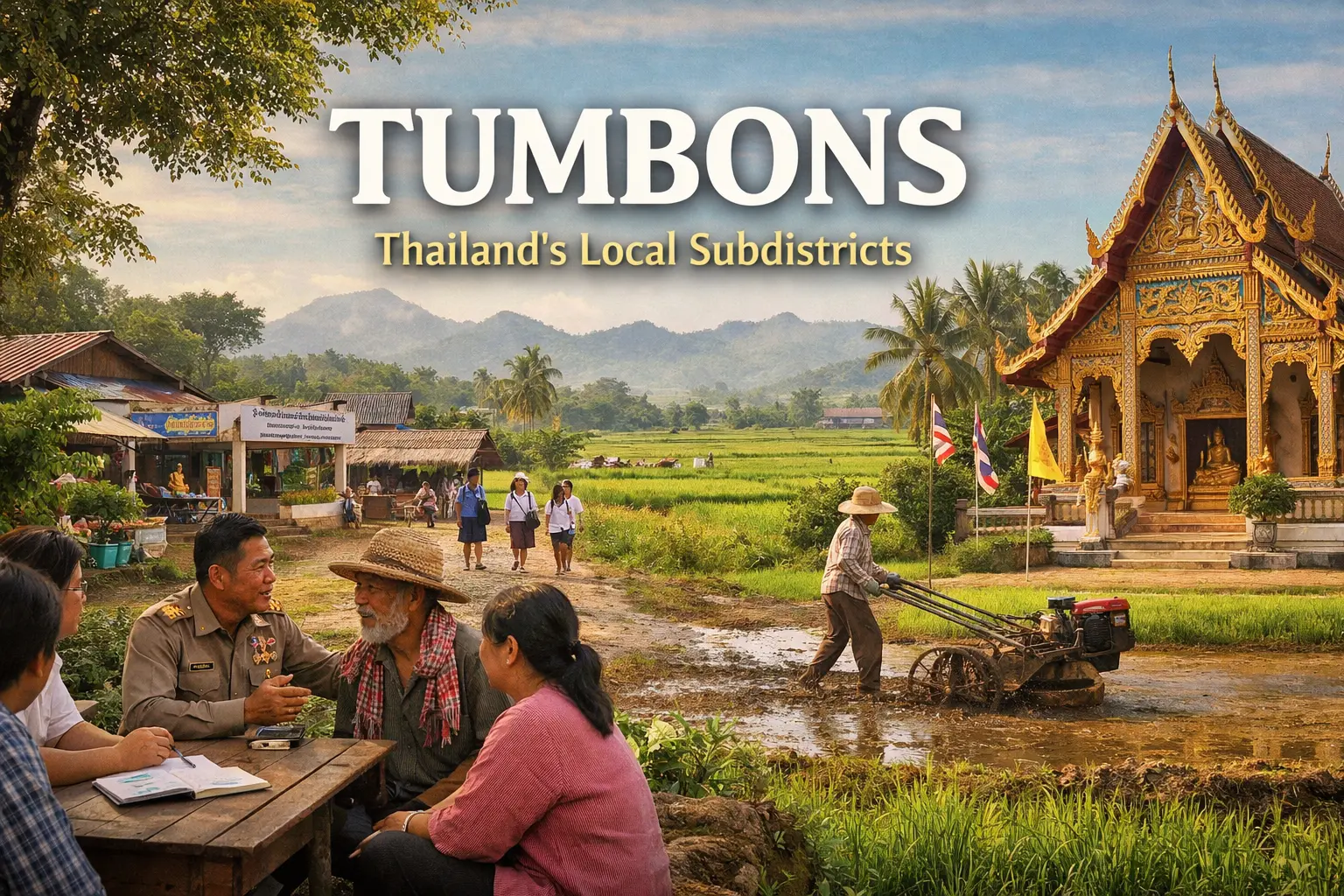
When exploring Thailand’s administrative system, one term frequently appears: tumbons. These subdistricts play a crucial role in local governance, community development, and the day-to-day lives of Thai citizens. Understanding tumbons is essential not only for those interested in Thailand’s culture and administration but also for anyone looking to understand how local government functions at a grassroots level.
What Are Tumbons?
A tumbon (Thai: ตำบล) is an administrative subdistrict in Thailand. Positioned below the district (amphoe) and above the village (muban), tumbons act as the backbone of local administration. Each tumbon typically comprises several villages and serves as the central link between the government and local communities.
The concept of tumbons ensures that services, policies, and regulations from the national level are efficiently implemented in rural and urban communities alike. From organizing festivals to managing infrastructure projects, the responsibilities of a tumbon are wide-ranging.
The Structure of Tumbons
Every tumbon has a defined structure that ensures smooth administration:
- Tambon Administrative Organization (TAO): Also known as the Subdistrict Administrative Organization (SAO), the TAO is an elected council responsible for planning, budgeting, and overseeing development projects.
- Village Heads (Phu Yai Ban): Each village within a tumbon has a head who coordinates local needs with the TAO.
- Community Participation: Local residents often participate in decision-making processes, giving tumbons a strong sense of identity and communal involvement.
This system allows tumbons to operate effectively, whether in a bustling urban area or a quiet rural village.
Responsibilities of Tumbons
Tumbons are responsible for a range of administrative, social, and cultural duties. Some of the key responsibilities include:
- Infrastructure Management: Roads, bridges, water systems, and public facilities are maintained at the tumbon level.
- Public Services: Schools, healthcare centers, and waste management fall under the jurisdiction of tumbons.
- Community Development: Local events, cultural festivals, and small-scale economic initiatives like handicraft promotion are coordinated by tumbons.
- Policy Implementation: National policies and programs, such as health campaigns or disaster relief efforts, are facilitated through the tumbon structure.
By handling these tasks, tumbons ensure that government support reaches every corner of the community.
Cultural Significance of Tumbons
Beyond administration, tumbons hold cultural importance. They preserve local traditions, organize community festivals, and foster a sense of belonging among residents. Many Thai citizens identify strongly with their tumbon, reflecting their village’s history, customs, and social identity.
For example, annual festivals, temple ceremonies, and local markets are often organized at the tumbon level, reinforcing both community engagement and local pride.
Urban vs Rural Tumbons
While all tumbons share similar administrative structures, their focus can differ depending on location:
- Rural Tumbons: Typically centered around agriculture and small communities, rural tumbons focus on basic infrastructure, education, and supporting local economies.
- Urban Tumbons: In cities, tumbons deal more with complex infrastructure, urban planning, and high-density public services.
This flexibility allows tumbons to meet the unique needs of their communities efficiently.
Why Tumbons Matter
Understanding tumbons is key to grasping Thailand’s local governance system. They provide:
- Direct Access to Government Services: Residents can access healthcare, education, and infrastructure support through their tumbon.
- Community Leadership: Through elected councils and village heads, citizens participate in local decision-making.
- Cultural Preservation: Tumbons safeguard traditions, festivals, and local identities that define Thailand’s diverse communities.
Without tumbons, the connection between the government and rural or urban communities would be far less effective.
Conclusion
In Thailand, tumbons are much more than administrative subdistricts—they are the lifeline of local governance, culture, and community identity. From ensuring public services reach every household to preserving local traditions, the role of tumbons cannot be overstated. Whether you are studying Thai governance or exploring the country, understanding tumbons offers a glimpse into the heart of Thailand’s communities.
FAQs About Tumbons
Q1: How many villages are in a typical tumbon?
Most tumbons comprise several villages (muban), usually between 5 and 20, depending on population and area.
Q2: Who governs a tumbon?
Each tumbon is governed by the Tambon Administrative Organization (TAO) and village heads who coordinate local affairs.
Q3: Are tumbons only found in rural areas?
No, tumbons exist in both rural and urban areas, with responsibilities adapted to local needs.
Q4: How are tumbons funded?
Tumbons receive funding from the national government, local taxes, and community development programs. The Tambon Administrative Organization manages budgets for infrastructure, public services, and local initiatives.
Q5: Can foreigners get involved in tumbon activities?
While official governance is reserved for Thai citizens, foreigners can participate in community events, cultural programs, and volunteer projects organized at the tumbon level, helping support local development.
You may Like: Unlocking the Power of Star Wars Movie FX QR Codes
